








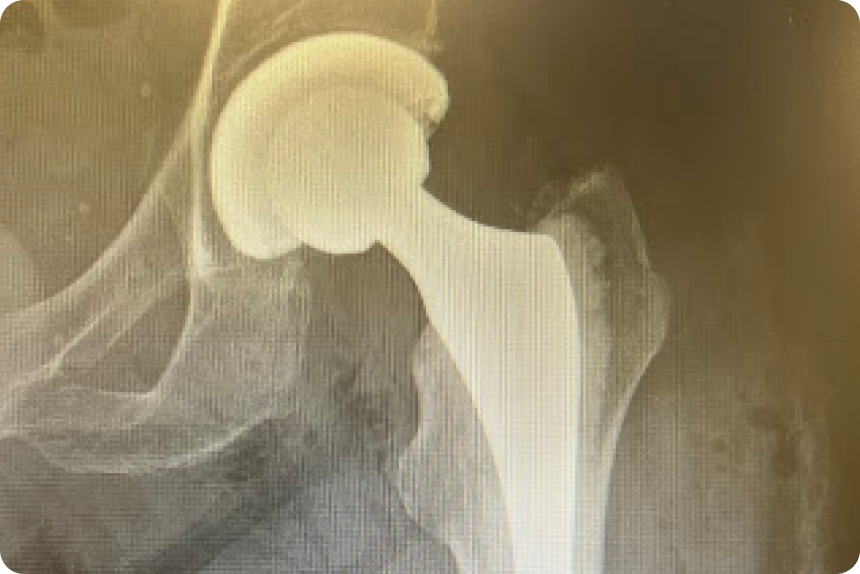
Hip Replacement Surgery : Fast Recovery

Living with hip pain can limit every step you take. Our advanced hip replacement procedures are tailored to relieve chronic pain, improve movement, and help you get back to an active, independent lifestyle as quickly and safely as possible.

Foundations of Mobility

The hip joint functions as the critical junction between the femur (thigh bone) and the pelvis. It is designed for both stability and significant range of motion, allowing us to perform essential daily tasks from walking to squatting.

As a weight-bearing joint, it supports the weight of the entire upper body while providing the leverage necessary for locomotion. Any injury or degenerative condition affecting the hip can severely impact your range of motion and weight-bearing ability.

Bones & Structural Joint

Knowledge is the first step in a successful recovery. Explore the complex structures that make your knee one of the most remarkable joints in the human body.

The Femur

The femur, or thigh bone, is the longest and strongest bone in the body. The top portion features the femoral head, a spherical ball that fits precisely into the pelvic socket. This structure is engineered to withstand immense pressures during movement.

The Acetabulum & Cartilage

The acetabulum is the deep, cup-shaped socket in the pelvis. It is lined with articular cartilage, a smooth, slippery tissue that allows the bones to glide without friction. Encircling the rim is the labrum, providing joint stability and a suction seal.
Ligaments : The Joint Stabilizers

Five key ligaments act as the primary biological anchors of the hip, ensuring strength
through every degree of rotation.

Iliofemoral Ligament

.The strongest ligament in the body, prevents hyperextension.

Pubofemoral Ligament

.The strongest ligament in the body, prevents hyperextension.

Ischiofemoral Ligament

Located on the posterior side, limits excessive internal rotation.

Ligamentum Teres

Connects the femoral head to the socket; vital for blood supply.

Capsular Ligaments

Enclose and support the joint, maintaining pressure and stability.

Dynamic stability

Muscles & Tendons

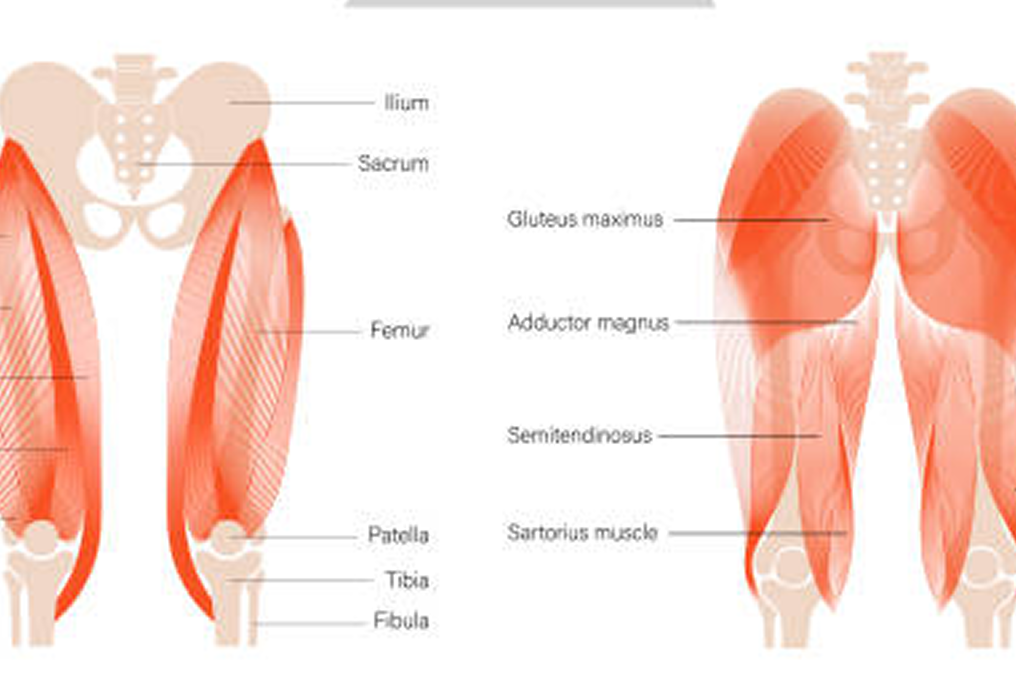
A complex engine of power. The muscles surrounding the hip joint provide the dynamic stability required for athletic and daily performance.

Gluteals

Maximus, medius, and minimus; the primary powerhouse for extension and pelvic leveling.

Adductors

Located on the inner thigh; vital for leg alignment and pulling limbs toward the midline.

Iliopsoas

The primary flexors that connect the spine and pelvis directly to the upper femur.

Rectus Femoris

Part of the quadriceps group; unique in that it crosses both the hip and knee joints.

Hamstrings

Biceps femoris, semitendinosus, and semimembranosus; assist in posterior hip extension.

  • NOTE ON BALANCE

Proper balance between these groups is vital for injury prevention and gait symmetry.

Major Nerve Pathways

The Sciatic nerve, Femoral nerve, and Obturator nerve coordinate sensation and complex muscle firing patterns for movement.

Vascular Supply

The Femoral artery and its circumflex branches supply life-sustaining oxygen. Protecting this supply is critical to avoid bone death (AVN).

The Life Lines of the Joint

Beyond the rigid structural components, the hip joint relies on a sophisticated biological network for communication and nourishment.

Precision in surgical procedures is vital to protect these delicate pathways, ensuring long-term joint health and sensory feedback.

Frequently Asked Questions

Our FAQs cover consultations, treatments, referrals, recovery, and appointments helping you find the information you need before your visit.

Hip replacement surgery usually takes around 1 to 2 hours, although the exact time can vary depending on the type of hip replacement, the complexity of the procedure, and your individual circumstances. Your surgeon will discuss the procedure and expected recovery with you before surgery.

Recovery varies from person to person and can take several months. Most patients begin walking soon after surgery with support from a physiotherapist, and many can return home within a few days. Your strength, mobility and comfort should gradually improve as you follow your rehabilitation programme and prescribed exercises.

Most patients can consider returning to driving at around 6 weeks after surgery, provided they have recovered sufficiently and can safely control the vehicle and perform an emergency stop without hesitation. You should always follow your surgeon’s advice and check with your insurance provider before driving again. 

You can gradually return to normal daily activities as your strength and mobility improve. Many people can return to lighter activities within the first few weeks, while a fuller recovery can take several months. The timing depends on your individual recovery, the type of work or activity you do, and your surgeon’s advice.

Frequently Asked Questions

Our FAQs cover consultations, treatments, referrals, recovery, and appointments helping you find the information you need before your visit.

How long until I can return to sport?

The time to return to sport depends on the type of injury, the treatment you receive, and your individual recovery. Some patients can resume light activities within a few weeks, while returning to high-impact sports after procedures such as ACL reconstruction or joint replacement may take several months. Mr. Kenan Dehne will provide a personalised rehabilitation plan and advise when it is safe to return to your chosen sport.

When can i drive?

The time it takes to return to driving depends on the type of surgery or treatment you have received, your recovery, and which leg was affected. You should only drive when you can safely control the vehicle, perform an emergency stop comfortably, and are no longer taking medication that could impair your ability to drive. Mr. Kenan Dehne will advise you when it is safe to resume driving based on your individual recovery.

WIll my insurance cover this?

Most major private health insurance providers cover eligible consultations, investigations, and surgical procedures, subject to the terms of your policy. We recommend contacting your insurer before treatment to confirm your level of cover, obtain any required pre-authorisation, and check whether there are any excess charges or exclusions.

What happens after my consultation?

After your consultation, Mr. Kenan Dehne will discuss your diagnosis and recommend the most appropriate treatment plan. Depending on your condition, this may include further imaging, physiotherapy, injections, or surgery. If treatment is required, our team will explain the next steps, arrange any necessary appointments, and support you throughout your care journey.