







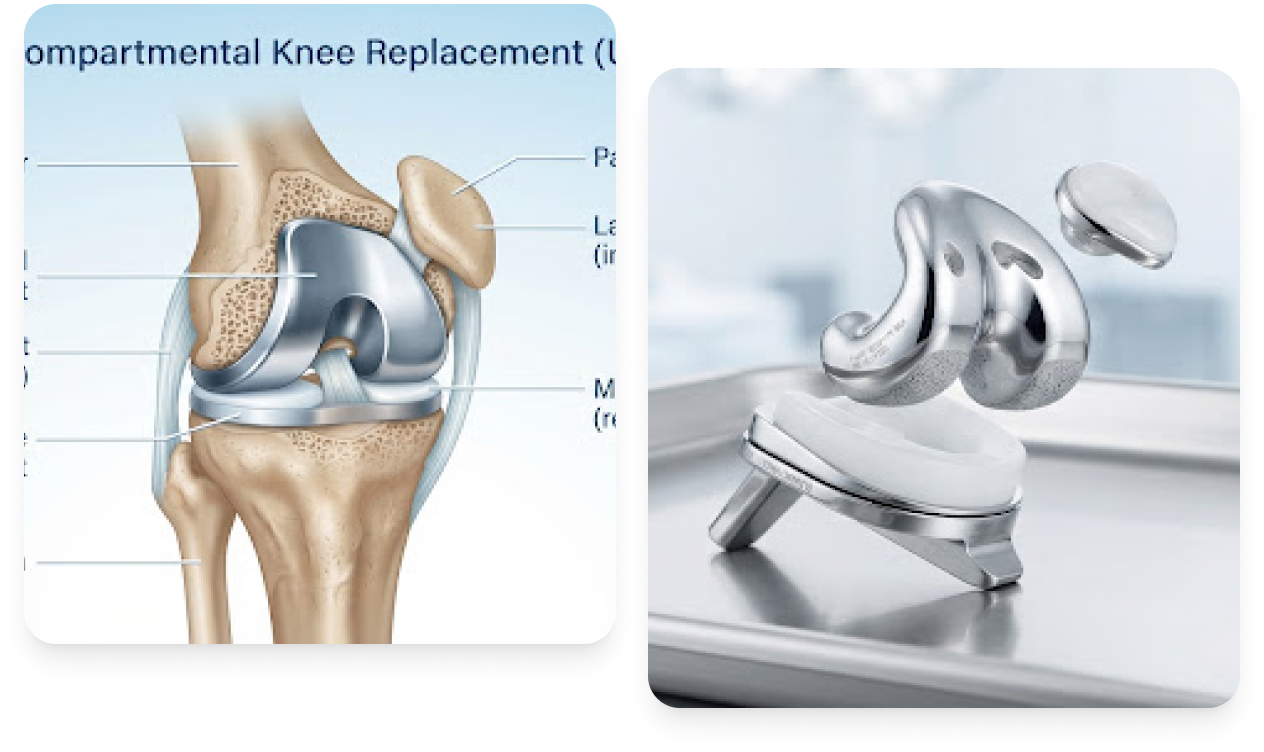
Partial (Unicompartmental) Knee Replacement
Advanced keyhole surgery to repair damaged cartilage, preserve your natural knee, and help you return to everyday activities with less pain and faster recovery.
Total vs. Partial Knee Replacement
Every patient is unique. Mr. Dehne provides tailored solutions, opting for joint-sparing "partial" replacements whenever clinical conditions allow, resulting in faster recovery and a more natural feel.

Partial Replacement
Only replaces the damaged compartment. Preserves healthy ligaments, leading to a faster return to sport.

Total Replacement
Comprehensive solution for multi-compartmental arthritis. Advanced materials for longevity and stability.
Why Choose Partial Replacement?
Comparing the patient outcomes of unicompartmental techniques versus traditional total knee surgery.

Faster Recovery
Most patients return to daily activities in 6 weeks compared to 12 weeks for total replacement.
-
reduction in rehab time

Success Rate
Over 95% of partial knee replacements are still functioning perfectly 10 years after the procedure.
The "Forgotten Knee" Effect
Because the healthy ligaments are preserved, patients report that the partial replacement feels significantly more like a "natural knee" than a total replacement.
-
Superior proprioception
-
Better range of motion
-
Lower surgical stress

Smaller Incisions
Minimally invasive approach results in minimal scarring and significantly less blood loss during surgery.

Outpatient Options
Many patients are eligible for same-day discharge, allowing recovery in the comfort of their own home.
Understanding Knee Anatomy
Knowledge is the first step in a successful recovery. Explore the complex structures that make your knee one of the most remarkable joints in the human body.
Bones of the Knee
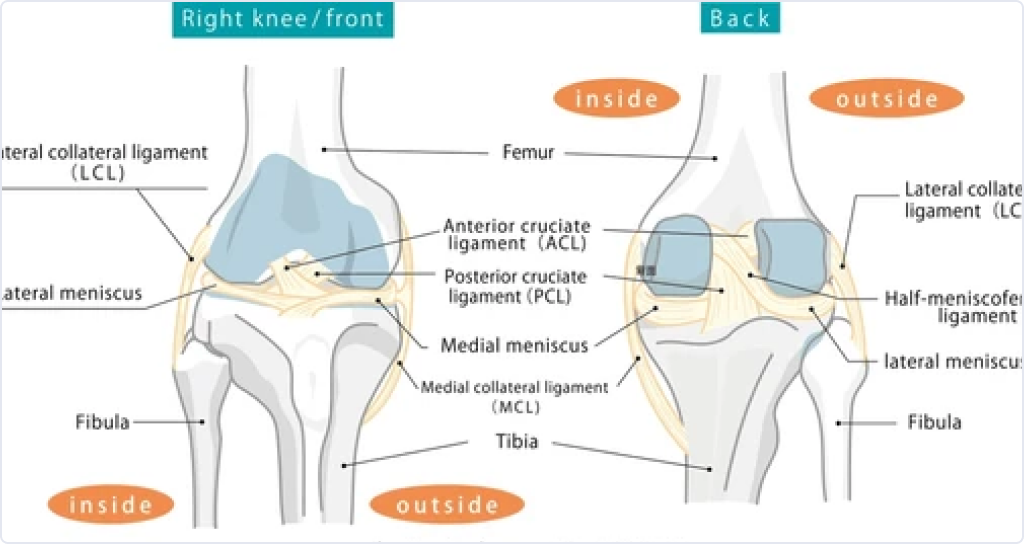
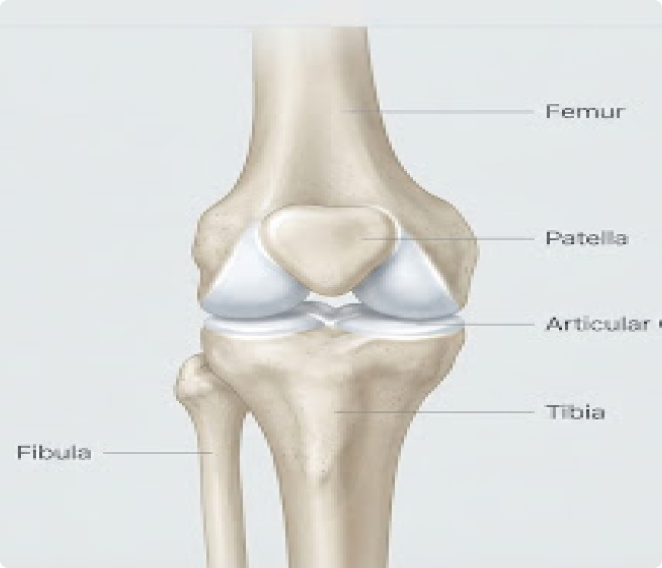
The knee is a hinge joint formed by the Femur (thighbone) and Tibia (shinbone). The Patella (kneecap) slides in a groove in the front of the femur.
The Fibula is the thinner bone of the lower leg, providing support and attachment points for ligaments but not bearing primary body weight.
Cartilage & Menisci
Articular cartilage provides a white, shiny, slippery layer that facilitates easy movement.
The Menisci act as shock absorbers, spreading the weight of the upper body across the tibia surface. The Menisci act as shock absorbers, spreading the weight of the upper body across the tibia surface.
The Ligament Network
Ligaments are tough bands of tissue that connect bone to bone, providing the vital stability required for complex movements.
STABILITY
ACL & PCL (Cruciate) control the back and forth motion.
SUPPORT
MCL & LCL (Collateral) prevent side to side movement.
Muscles
The Quadriceps at the front straighten the knee, while the Hamstrings at the back enable bending. Healthy muscle tone is critical for post-op recovery.
Tendons
The Patellar Tendon connects the kneecap to the shinbone, acting as a powerful lever for the quadriceps to extend the leg.
Synovial Fluid
A thick clear fluid that lubricates and nourishes the cartilage, ensuring that articulating surfaces glide smoothly without friction.
Frequently Asked Questions
Our FAQs cover consultations, treatments, referrals, recovery, and appointments helping you find the information you need before your visit.
01 How long until I can return to sport?
The time to return to sport depends on the type of injury, the treatment you receive, and your individual recovery. Some patients can resume light activities within a few weeks, while returning to high-impact sports after procedures such as ACL reconstruction or joint replacement may take several months. Mr. Kenan Dehne will provide a personalised rehabilitation plan and advise when it is safe to return to your chosen sport.
02 When can i drive?
The time it takes to return to driving depends on the type of surgery or treatment you have received, your recovery, and which leg was affected. You should only drive when you can safely control the vehicle, perform an emergency stop comfortably, and are no longer taking medication that could impair your ability to drive. Mr. Kenan Dehne will advise you when it is safe to resume driving based on your individual recovery.
03 WIll my insurance cover this?
Most major private health insurance providers cover eligible consultations, investigations, and surgical procedures, subject to the terms of your policy. We recommend contacting your insurer before treatment to confirm your level of cover, obtain any required pre-authorisation, and check whether there are any excess charges or exclusions.
04 What happens after my consultation?
After your consultation, Mr. Kenan Dehne will discuss your diagnosis and recommend the most appropriate treatment plan. Depending on your condition, this may include further imaging, physiotherapy, injections, or surgery. If treatment is required, our team will explain the next steps, arrange any necessary appointments, and support you throughout your care journey.